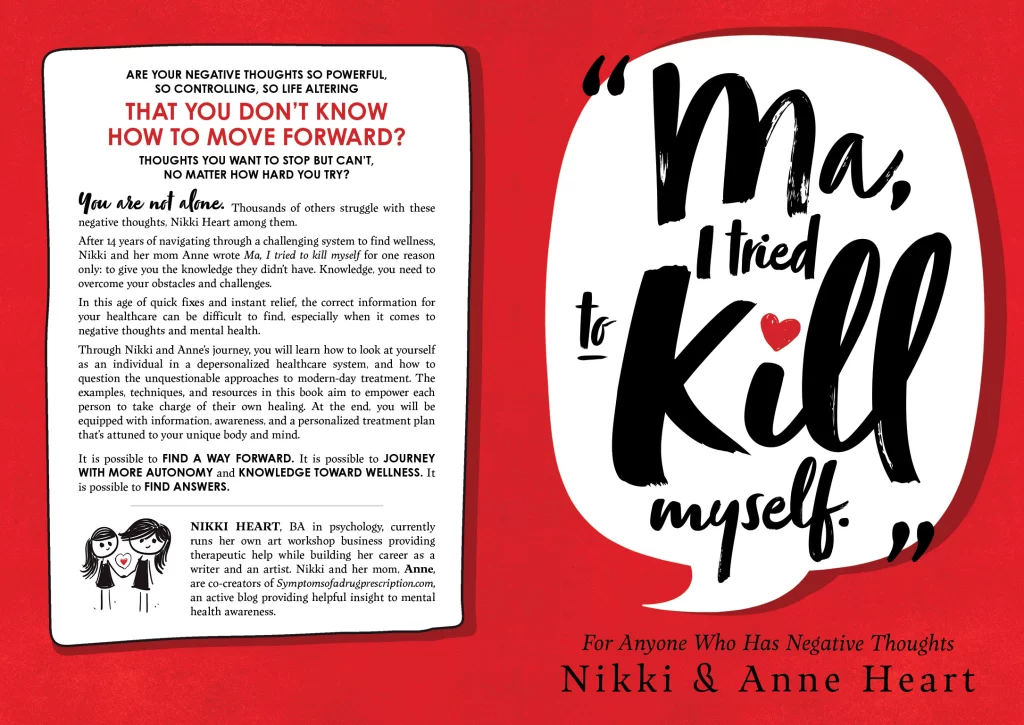
*Although we wrote this post together, we have chosen to present the following through Nikki’s eyes.
Nikki's Story: Journey through Singulair
When I first started taking Singulair, I was in sixth grade, a young girl in puberty. And, of course, I was experiencing both physical and emotional changes as any female my age would have.
During this time, I started seeing my first counselor. It was acknowledged by my parents that I had traits of obsessive-compulsive disorder, similar to my dad, even though a name wasn’t put on it.
Unfortunately, my counselor nor did my primary doctor ever discuss Singulair and mental health. I remember discussing the pros and cons of taking Singulair, but mental health never entered into conversations with my healthcare providers. My assumption was that I can stop Singulair at any time without any negative effects.
Over the years, I continued to have deepened depression and extreme negative thoughts. In 2010, my first year of college, I was prescribed psychiatric medication while still being on Singulair.
It wasn’t until 2013 when a healthcare provider advised me to stop taking Singulair, since it can cause mental health issues.
By then, my life had already taken a turn for the worse.
Singulair and mental health
I have learned how wrong my assumption was regarding Singulair and just stopping.
Singulair can cause serious mental health relalted effects–something I had never been told.
The following is information from the Singulair Medication Guide:
Serious mental health problems have happened in people taking Singulair or even after treatment has stopped. This can happen in people with or without a history of mental health problems. Stop taking Singulair and tell your healthcare provider right away if you or your child have any unusual changes in behavior or thinking, including any of these symptoms:
agitation, including aggressive behavior or hostility
attention problems
bad or vivid dreams
depression
disorientation (confusion)
feeling anxious
irritability
hallucinations (seeing or hearing things that are not really there)
memory problems
obsessive-compulsive symptoms
restlessness
sleep walking
stuttering
suicidal thoughts and actions (including suicide)
tremor
trouble sleeping
uncontrolled muscle movement
Information and sources used:
FDA approved Singulair (Montelukast Sodium) in 1998.
In 2008, FDA releases an ongoing safety review regarding Singulair and mental health.
Black boxed warning was required in 2020 by the FDA.
Note: All information in “Nikki’s Story and Mom’s Story” are based on detail journals covering seven years of Nikki’s life on prescription drugs.
Medical Disclaimer: We share informational resources that are intended to help you with your self-care plan. We are not professionals. We write based on personal experience and personal research.
Nothing on this Website is intended to be taken as medical advice. The information provided on the Website is intended to encourage, not replace, direct patient-health professional relationships. Always consult with your doctor before altering your medications. Adding nutritional supplements may alter the effect of medication. Any medication changes should be done only after proper evaluation and under medical supervision.
General Disclaimer: This site contains links to other internet sites. We are not endorsing any products or services in these sites nor are we endorsing or did we approve information within these sites. Each site contains its own “Privacy Policy”,