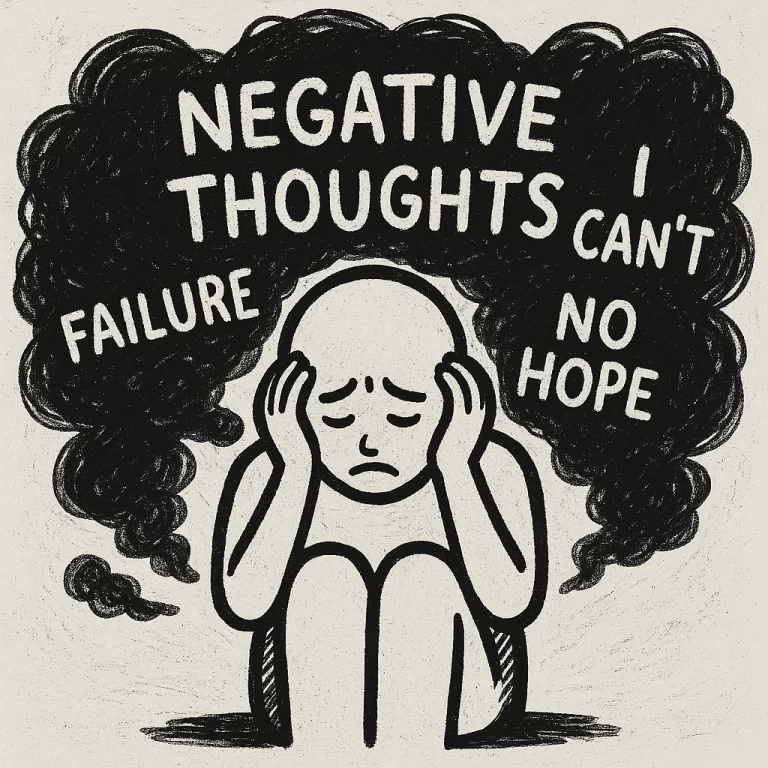
Negative thoughts are more than just “bad thinking.”
They can be:
unhealthy
misunderstood,
and incredibly difficult to manage, especially for individuals recovering from trauma, long‑term stress, or the effects of a prescription drug treatment.
These thoughts often appear automatic, intrusive, and persistent, making them feel overwhelming or even defining. But they are not a reflection of someone’s worth, intelligence, or potential—they’re simply patterns the mind has learned over time.
Negative thoughts can arise from many places: past experiences, fear, exhaustion, chemical imbalances, or the brain’s attempt to protect you from perceived danger. When someone has been through a challenging health journey—especially one involving medications, withdrawal, or misdiagnosis—these thoughts can become even more intense or confusing.
The key is not to judge yourself for having them, but to understand how to work with them.
Core Ideas for Working with Negative Thoughts
Recognize
Notice when a negative thought appears instead of letting it run in the background.
Identify the patterns—Is it fear? Self‑criticism? Catastrophizing?
Acknowledge the thought without accepting it as truth.
Recognition is the first step toward breaking the cycle.
Control
You may not control the arrival of a negative thought, but you can control your response.
Slow down the moment: breathe, pause, and create space between the thought and your reaction.
Challenge the thought gently: Is this accurate? Is this fear talking? Is this an old belief resurfacing?
Redirect your attention toward something grounding—movement, a sensory cue, or a calming activity.
Balance
Balance doesn’t mean forcing positivity; it means creating a healthier internal dialogue.
Pair the negative thought with a realistic counter‑thought.
“I’m failing” becomes “I’m learning and adjusting.”
“I can’t handle this” becomes “I’ve handled hard things before.”
Balance also means giving yourself grace. Healing is not linear, and your mind needs time to relearn safety.
First step, Recognize:
A few examples of negative thoughts:
Even after consciously locking the front door, hours later a wave of uncertainty can surface. The mind begins to insist that the house is vulnerable to burglary, overriding the rational memory of locking it.
Despite clearly remembering unplugging the iron, intrusive doubts may arise. The mind jumps to vivid images of the house catching fire, creating a sense of urgency that doesn’t match reality.
A small bump in the road can trigger a sudden fear that you may have hit someone, even though there is no evidence or indication that anything happened.
When a friend doesn’t respond as expected, the mind may fill in the gaps with self‑blame—assuming you’ve upset them or done something wrong, despite having no actual reason to believe this.
Touching a light switch with damp hands can spark an intrusive fear that this simple action will cause an electrical fire, even though the real‑world risk is essentially nonexistent.
Second step, Control:
Learn and apply techniques to help decrease the intensity, if not stop, the negative thought.
Techniques can include:
Distraction
Mindfulness
Living in the Present
Tapping
Snapping
Self-care
Exercise
Walking
Running
Deep breathing exercise
Journaling
Meditating
Listening to Music
Negative thought patterns can be amplified by everyday stressors like fatigue, hunger, poor diet, low self-esteem, excessive time on social media, or the use of alcohol and recreational drugs. Recognizing and managing these factors may lessen the frequency and intensity of negative thinking.
When you’re in the midst of a difficult moment, stepping back to view a thought rationally may not always be possible. In those instances, the goal isn’t to judge the thought—it’s to gently shift your mental focus elsewhere, so that the thought doesn’t spiral out of control.
With practice, it may become easier to sit with a thought and respond with resilience—perhaps even say, “So what if that happens?” But it’s important to acknowledge that this kind of detachment isn’t easy and doesn’t come quickly.
Third step, Balance:
It is important to create a system of balance by not overusing controlling techniques to completely change the mind.
By slowly integrating new techniques into your everyday life, can help in achieving a well-balanced and healthier mind.
Remember, you cannot change the way your mind thinks all at once. Using a distraction technique every time can become more harmful than good. And trying to face every negative thought can also have negative consequences.
Medical Disclaimer: We share informational resources that are intended to help you with your self-care plan. We are not professionals. We write based on personal experience and personal research.
Nothing on this Website is intended to be taken as medical advice. The information provided on the Website is intended to encourage, not replace, direct patient-health professional relationships. Always consult with your doctor before altering your medications. Adding nutritional supplements may alter the effect of medication. Any medication changes should be done only after proper evaluation and under medical supervision.
General Disclaimer: This site contains links to other internet sites. We are not endorsing any products or services in these sites nor are we endorsing or did we approve information within these sites. Each site contains its own “Privacy Policy”,