Symptoms of a Drug Prescription


Learn More Live Healthier

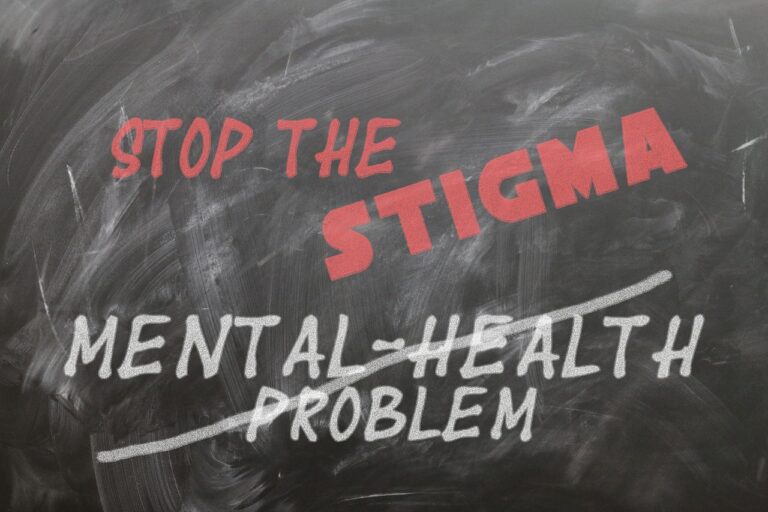
Mental Health and Health Care Stigma

by Nikki and Anne Heart ♥ August 20, 2026

mental health, mental, health-3337018.jpg

*Although we wrote this post together, we have chosen to present the following through Mom’s eyes.

Is there stigma regarding healthcare and mental health?

From the moment my daughter began her prescription drug treatment plan, I saw a noticeable shift in the way she was treated within the healthcare system.

Whenever she experienced pain—whether in her chest, stomach, or joints—the moment her medications were mentioned, her symptoms were dismissed. It was as if the label of “mental health patient” overshadowed every legitimate concern she tried to express.

I watched her be overlooked again and again in the emergency room. The message was painfully clear: her suffering was not taken seriously.

What I have found is that the stigma surrounding mental health seems to be deeply rooted in the medical community. And once the mental illness label is attached, it seems to follow the patient—shaping how healthcare providers listen, how they respond, and too often, how they fail to act.

Health care and mental health

Being aware that long waits in the emergency room have become the norm is one thing. I’ve experienced it myself, and I know many others have too. But over time, I began to notice a difference in how I was treated compared to how my daughter was treated. Whether it was an emergency room, urgent care, or a doctor’s office, the contrast was hard to ignore.

Instead of questioning whether her medications might be contributing to her symptoms, the first thing providers asked was whether she was feeling mentally okay. Her physical pain was secondary. Her mental health label came first.

A newspaper article only confirmed what I had already seen with my own eyes. The piece discussed longer wait times in emergency rooms overall, but it also acknowledged something far more troubling: patients with mental health histories wait an average of 50% longer in Long Island hospitals than other patients.¹

Sadly, this does not surprise me. It simply reflects what my daughter has endured for years.

man, infinity, brain-8159680.jpg
Stigma surrounding mental health treatment causes negative consequences

Stigma surrounding mental health treatment leads to real and lasting consequences. I’ve seen it in my daughter’s experiences, and I’ve seen it reflected in the broader medical system. When someone is labeled with a mental health condition, the care they receive often shifts in ways that are subtle at first—but deeply harmful over time.

This stigma can result in:

  • Delayed treatment — symptoms are brushed aside or minimized, causing people to wait longer for the care they urgently need.

  • Reduced treatment — providers may overlook physical complaints, assuming they are “mental health–related,” and fail to investigate further.

  • Inappropriate treatment — instead of addressing the actual medical issue, care is redirected toward mental health, even when it’s not the root cause.

  • Misconceptions — harmful assumptions replace thoughtful evaluation, leading to misunderstandings about a person’s health and needs.

  • Negative impacts on individuals with mental illness — people feel unheard, dismissed, and stigmatized, which can worsen both physical and emotional well‑being.

  • Ethnic and cultural variations — stigma does not affect everyone equally; cultural background can influence how mental health is perceived and how care is delivered, sometimes deepening disparities.

Things that can be done
  1. Remove the stigma surrounding mental health
  2. Recognize when a health care provider or facility is treating mental health patients differently
  3. Acknowledge that mental health disorders are real
  4. Develop peer support programs
  5. Establish community-based mental health services
  6. Appropriate training for Health Care Providers
  7. Awareness is key to an appropriate treatment plan

Sources used:

  1. Newsday Long Island, Long Waits at the E.R., reported by Robert Brodsy, Lorena Mongelli and Anastasia Valeeva, September 9, 2024 edition.
  2. National Library of Medicine, “Understanding and Addressing Mental Health Stigma,” Ahad AA, Sanchez-Gonzalez M, Junquera P. Understanding and Addressing Mental Health Stigma Across Cultures for Improving Psychiatric Care: A Narrative Review. Cureus. 2023 May 26;15(5):e39549. doi: 10.7759/cureus.39549. PMID: 37250612; PMCID: PMC10220277, accessed August 17, 2026.
  3. National Library of Medicine, “Understanding and Addressing Mental Health Disparities and Stigma in Serious Illness and Palliative Care,” Gerhart J, Oswald LB, McLouth L, Gibb L, Perry L, England AE, Sannes T, Schoenbine D, Ramos K, Greenberg J, O’Mahony S, Levine S, Baron A, Hoerger M. Understanding and Addressing Mental Health Disparities and Stigma in Serious Illness and Palliative Care. Illn Crises Loss. 2025 Jan;33(1):109-129. doi: 10.1177/10541373231201952. Epub 2023 Sep 24. PMID: 39668846; PMCID: PMC11633853.


Weekly Quote
“The first step toward change is awareness. The second step is acceptance.”

-Nathaniel Branden –

Related Posts
Stop the Stigma
Facing Stigma
medical, health, doctor-5459632.jpg
How Changes to the Health Care System Effects You
meditation, yoga, seasons-7308899.jpg
How Self-Care Can Help Your Mental Health

Learn More

Live Healthier

Get More Information

Drug Fact Sheets

Read more

Weekly Posts Every Thursday


DON’T FORGET TO VISIT OUR NEW TIP PAGES EVERY TUESDAY

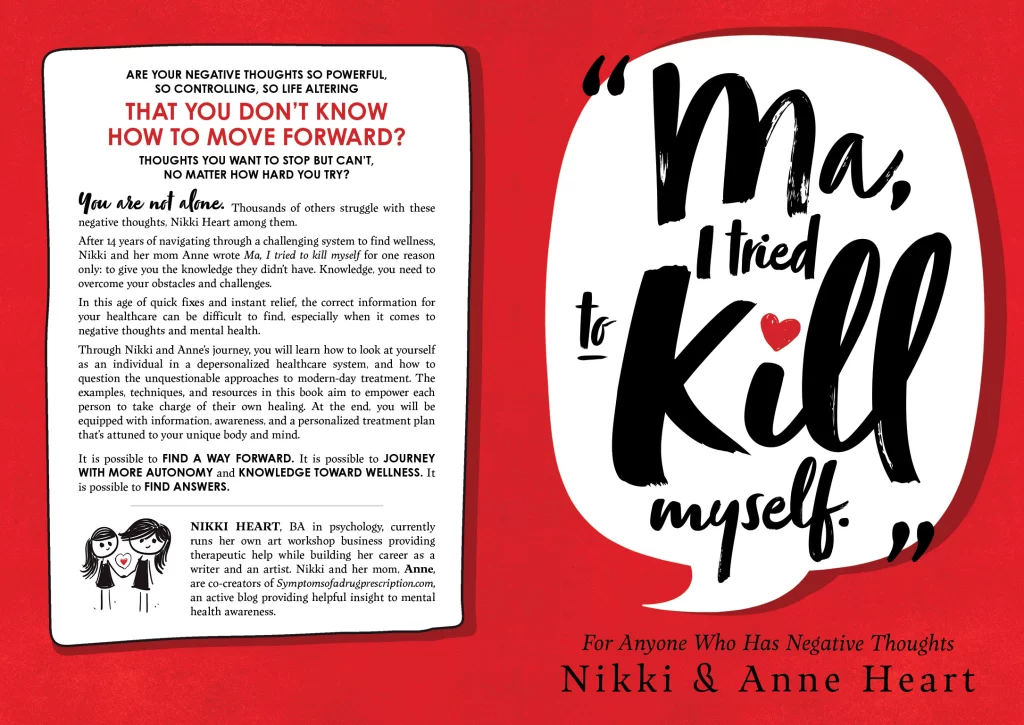
For Anyone Who Has Negative Thoughts

Our Debut Self-Help book

Now Available on Amazon

Note: All information in “Nikki’s Story and Mom’s Story” are based on detail journals covering seven years of Nikki’s life on prescription drugs.

Medical Disclaimer: We share informational resources that are intended to help you with your self-care plan. We are not professionals. We write based on personal experience and personal research.

Nothing on this Website is intended to be taken as medical advice. The information provided on the Website is intended to encourage, not replace, direct patient-health professional relationships. Always consult with your doctor before altering your medications. Adding nutritional supplements may alter the effect of medication. Any medication changes should be done only after proper evaluation and under medical supervision.

General Disclaimer: This site contains links to other internet sites. We are not endorsing any products or services in these sites nor are we endorsing or did we approve information within these sites. Each site contains its own “Privacy Policy”,

🤞 Want to level up your health this year?

Sign up for FREE weekly awareness posts. Never be without information again.

We don’t spam! Read more in our privacy policy