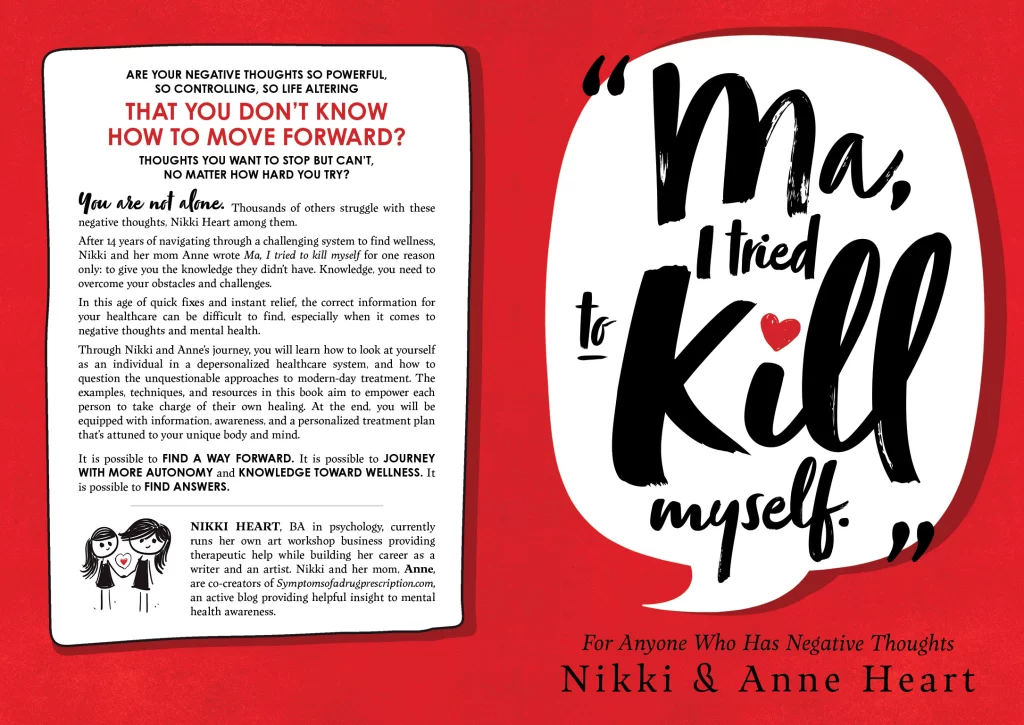
*Although we wrote this post together, we have chosen to present the following through Mom’s eyes.
Mom's Story: Journey through Prescription Prescribers
Growing up, the rhythm of healthcare felt straightforward: if you needed a prescription, you went to a doctor. That was the norm, the unquestioned structure of how care was delivered. The idea that anyone else might provide medication never crossed my mind–it simply wasn’t part of the world I knew.
When my daughter, Nikki, began her journey for wellness, the first person who prescribed a mental health medication was a nurse practioner. An occupation I was not familiar with and was surprised that she had a license to prescribe medication.
Whether or not this nurse practioner was inept or incompetent in prescribing a treatment plan, or the training to prescribe medication wasn’t adequate enough, is questionable. But what we have learned over the years is that the medical treatment she provided my daughter was far from acceptable.
Her approach to prescribing was essentially trial and error. We began recognizing her treatment plan coincided with the amount of free medication samples she had available. It took years—years of watching Nikki struggle—to realize how ineffective and even harmful this treatment plan truly was.
Over time, it became painfully clear that her knowledge of the medications she prescribed was limited. She never ordered the necessary bloodwork, never monitored how the drugs interacted with one another, and never acknowledged the potential risks these combinations posed. Looking back, it’s frightening how much she overlooked.
The full extent of the problem didn’t become obvious until Nikki switched to a new healthcare provider. Only then did we learn how incomplete and confusing her previous providers medical notes were. The new provider told us, bluntly, that the notes were essentially worthless.
Prescribing medication is an extremely serious medical responsibility — one that demands deep expertise and careful consideration.
Through Nikki’s experience, my family learned firsthand just how powerful mental‑health medications can be. For some people, they offer genuine relief and open the door to a better quality of life. But in Nikki’s case, we witnessed the other side of that power: severe, lasting effects that continued long after the prescriptions stopped.
Over time, we also realized something unsettling. Even well‑intentioned healthcare prescribers don’t always have a full picture of a drug’s potential side effects, nor do they consistently recognize how uniquely sensitive certain patients can be. That gap — between what is known and what is assumed — can have life‑altering consequences.
Important facts to know about your healthcare prescriber
Education and training are less to become a nurse practioner than a medical doctor.
Education and training are less to become a physician assistant than a medical doctor.
In all 50 states nurse practioners can prescribe medication to some degree.
In some states, nurse practioners can prescribe medication without the supervision of a medical doctor.
Physician assistants can prescribe medication under the scope of their supervising physician. (In some states, a supervising physician may no longer be needed.)
Note: Be aware of your state’s current law regarding who can prescribe medication.
Medication prescribers are licensed medical professionals with specific prescribing authority
Medical Doctors (MDs)
Doctors of Osteopathic Medicine (DOs)
Nurse Practioners (NPs)
Physician Assistants (PAs)
Dentists
Veterinarians
State laws and exact practice rules vary.
Awareness is key to a successful treatment plan
From personal experience, obtaining an accurate diagnosis and an appropriate treatment plan is essential to your well‑being. When medication becomes part of that plan, the knowledge, training, and qualifications of the healthcare provider prescribing it should be a central factor in your decision‑making.
Being informed about who is managing your care—and the level of expertise they bring—can make a meaningful difference in both safety and outcome.
Never hesitate to question a treatment plan and research the medication yourself.
NAMI, Type of Mental Health Professionals, accessed August 10, 2026.
Learn More
♥
Live Healthier
Informational Pages
Tips for YOU
Organic Food
Hidden Triggers
Weekly Posts Every Thursday
DON’T FORGET TO VISIT OUR NEW TIP PAGES EVERY TUESDAY
Weekly Quote
” The only people who achieve much are those who want knowledge so badly that they seek it while the conditions are still unfavorable. Favorable conditions never come.”
Note: All information in “Nikki’s Story and Mom’s Story” are based on detail journals covering seven years of Nikki’s life on prescription drugs.
Medical Disclaimer: We share informational resources that are intended to help you with your self-care plan. We are not professionals. We write based on personal experience and personal research.
Nothing on this Website is intended to be taken as medical advice. The information provided on the Website is intended to encourage, not replace, direct patient-health professional relationships. Always consult with your doctor before altering your medications. Adding nutritional supplements may alter the effect of medication. Any medication changes should be done only after proper evaluation and under medical supervision.
General Disclaimer: This site contains links to other internet sites. We are not endorsing any products or services in these sites nor are we endorsing or did we approve information within these sites. Each site contains its own “Privacy Policy”,