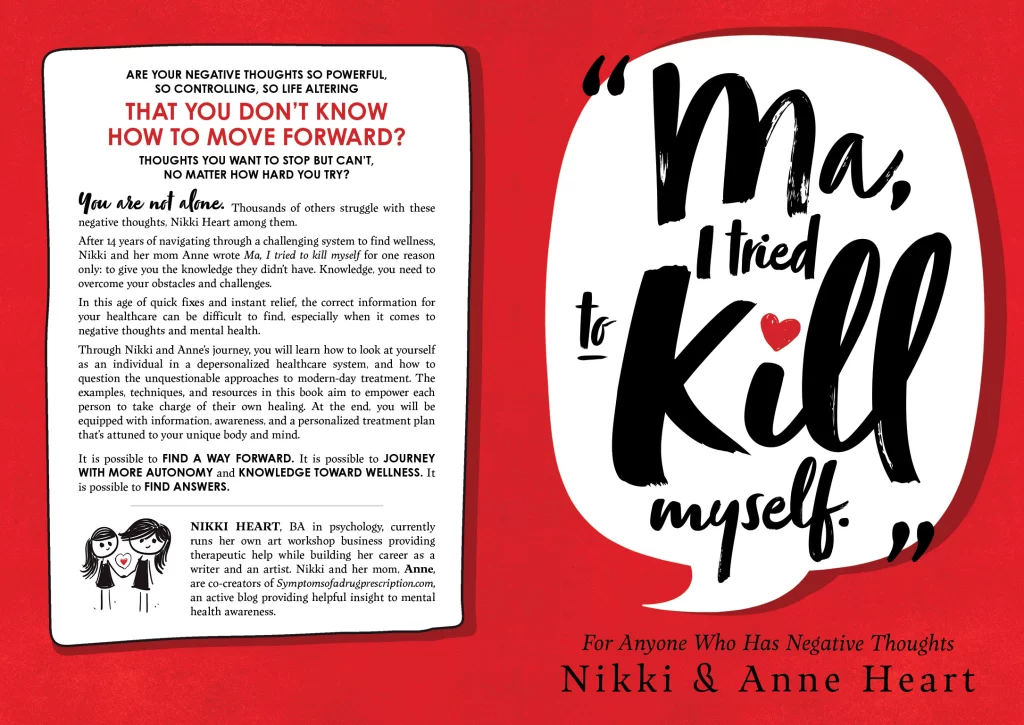
*Although we wrote this post together, we have chosen to present the following through Nikki’s eyes.
Nikki's Story: Journey through Gabapentin
By the time Gabapentin entered my life, I was already five years into a prescription‑drug treatment plan. My mental and physical health had been steadily unraveling, and it felt like ages since I’d first set out in 2010—my freshman year of college—hoping to find a path toward real wellness.
Desperate for help, I moved on to my third healthcare provider, hoping a new perspective might finally bring relief. Unfortunately, the new provider adhered to the same drug regimen. He kept me on the two medications that had become the foundation of every plan before it—Lithium and Abilify—now referred to as my base medications and added two more drugs to the mix—Klonopin and Valium. With no improvement to my health, he prescribed Gabapentin (Neurontin) to the mix.
Because Gabapentin came in capsule form, I was told to open the 100 mg capsule and take only a quarter of the powder each day. That instruction alone left me feeling defeated. No matter how hard I tried, there was no way to measure a consistent dose. Some days I felt high, disconnected from myself; other days I felt ill.
This regimen left me truly feeling like a drug addict and not a patient seeking wellness.
After just three months, the familiar sense of hopelessness crept back in. Instead of moving forward with a wellness plan, I moved further away from hope of ever feeling better.
While being prescribed several medications at the same time, it can sometimes be difficult to distinguish the side effects of a particular drug from that of a combination or even withdrawal.
However, the symptoms I could clearly connect to Gabapentin itself were:
A sudden sense of euphoria that didn’t feel natural
An overall feeling of illness that lingered no matter what I did
It was also recognizable that when I combined Gabapentin to the existing medications I already was taking, it created more severe and at times overwhelming side effects:
dizziness
anxiety
increased negative thoughts
nauseousness
joint pain
memory problems
After some time, it became very apparent to me that Gabapentin and the combination of medications prescribed to me were doing me more harm than good.
Questions to Consider When Taking Gabapentin or Any Prescription Medication
When I look back on my experience with Gabapentin—and really, with any medication I was prescribed—there were important questions I wish I had the awareness to ask.
These questions aren’t about challenging medical advice, but making sure my treatment plan truly supports my wellbeing.
Is the medication I’m currently taking bringing me more positive effects than negative ones? Understanding the overall impact matters, not just whether a drug is “supposed” to help.
If a medication isn’t working, should I withdraw from it instead of continuing on it? Knowing when something isn’t serving you is just as important as knowing when it is.
If a capsule needs to be opened, can I realistically take an accurate dose? Measuring powder from inside a capsule can be inaccurate.
Does the medication’s own guidelines recommend opening the capsule at all? Not every drug is meant to be altered, even if it seems like a small adjustment.
Even if a tablet is scored, is cutting it actually appropriate for this medication? A score line doesn’t always mean the medication is safe or effective when split.
Will the medication work the same way if I alter it in any form? Changing how a drug is taken can change how it affects the body.
Is it even possible to cut a pill into less than half and still get an accurate dose? Precision matters, and sometimes the instructions we are given don’t match what’s realistically doable.
Can a combination of medications have different side effects when taken together?
Be Aware When Taking Gabapentin or Another Prescription Drug
Awareness becomes one of the most important tools you have when you’re taking Gabapentin—or any prescribed drug. Paying attention to how your body and mind respond can help you understand whether a medication is truly supporting your wellbeing.
Recognize any changes in your symptoms after taking a prescribed drug both positive and negative.
Ask yourself whether the medication is brining bringing more benefit or more harm.
Remember that everyone responds differently.
Accept that there are no quick fixes.
Living a happy and healthy lifestyle may be a lifelong commitment, but it is possible.
Note: All information in “Nikki’s Story and Mom’s Story” are based on detail journals covering seven years of Nikki’s life on prescription drugs.
Medical Disclaimer: We share informational resources that are intended to help you with your self-care plan. We are not professionals. We write based on personal experience and personal research.
Nothing on this Website is intended to be taken as medical advice. The information provided on the Website is intended to encourage, not replace, direct patient-health professional relationships. Always consult with your doctor before altering your medications. Adding nutritional supplements may alter the effect of medication. Any medication changes should be done only after proper evaluation and under medical supervision.
General Disclaimer: This site contains links to other internet sites. We are not endorsing any products or services in these sites nor are we endorsing or did we approve information within these sites. Each site contains its own “Privacy Policy”,