Symptoms of a Drug Prescription


Learn More Live Healthier


A New Awareness


 Nikki and Anne Heart ♥ September 18, 2025


*Although we wrote this post together, we have chosen to present the following through Mom’s eyes.

After years of revisiting Nikki’s treatment plan following her suicide attempt, we’ve come to a deeper awareness to what truly went wrong.

The most troubling realization is that none of her healthcare providers took her adverse reactions to prescribed medications seriously. These weren’t minor side effects—they were clear signals that something was off, and they deserved careful, individualized attention.

Instead, Nikki was prescribed medications with improper dosage and usage instructions. The consequences were profound.

It’s nearly impossible to untangle the harm caused by the medications themselves from the damage done by how they were prescribed.

What we now know—what we wish had been known then—is that every person must be treated as an individual, not a generic case.

And just as critically, healthcare providers must be knowledgeable about the drugs they prescribe—not just what pharmaceutical representatives choose to share.

This experience has taught us that true healing begins with a healthcare provider who listens and believes what a person is saying. And the individual questioning and researching what they are being told.

Mental health treatment is not simple. In most cases, it isn’t a quick fix.

Each person should be looked at individually without judgement.

Steps to a new awareness.

First, uncovering hidden triggers.

For years, my daughter Nikki was prescribed medications to support her mental health. She followed the guidance, trusted the process, and hoped for relief. But despite this, she never truly felt well.

During this time, we continued to believe what the healthcare providers were saying, that Nikki was just very sensitive to the medications. But something didn’t add up.

Her physical and mental pain persistently worsened. And unfortunately, it was continuously dismissed by the healthcare professionals.

What we began to realize was the prescribed drugs weren’t just failing to help—they were contributing to her suffering.

Over time, patterns emerged. Nikki’s reactions weren’t limited to pharmaceuticals. Everyday foods, personal care products, and even household items were quietly triggering pain. Preservatives, artificial dyes, synthetic fragrances—ingredients most people overlook—were wreaking havoc on her body and mind. We began to understand the true nature of her sensitivities and how they were controlling her overall health.

This awareness didn’t arrive overnight. It was a slow unraveling which was frowned upon by the medical community. But each new reaction—whether to a scented candle or a seemingly harmless lotion—taught us that this is real. So, we learned to read labels like detectives, to question the professional ingredients, and to trust Nikki’s intuition when something felt “off.” 

Second, knowledge.

Even now, the learning continues. Nikki still experiences new sensitivities—unexpected responses to smells or ingredients that others might find benign. A walk through a department store, a visit to a friend’s home, even a change in laundry detergent can trigger a real physical or mental symptom.

With recent testing for chemicals, Nikki now has confirmation for her physical and mental reactions to medications, products, food, etc.

However, we are also aware that Nikki’s sensitivities and allergies wasn’t the only contributing factor to her physical and mental decline.

Third, recognizing.

During Nikki’s treatment, we slowly began to recognize serious flaws in how her medications were being managed.

Drugs were switched abruptly—one to the next—without any real consideration for withdrawal effects or tapering protocols. It was as if the transitions were treated as routine, when in reality, they were anything but.

Some pills were prescribed with instructions to cut or open them, despite clear warnings that they shouldn’t be altered. This alone brought harmful consequences to Nikki’s health.

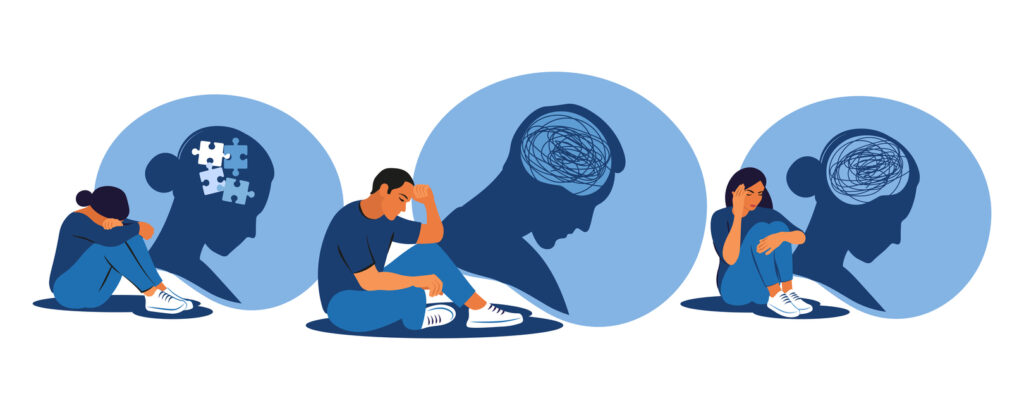
Even more troubling, diagnoses were often shaped by the side effects of the medications themselves, rather than by a careful assessment of Nikki’s actual symptoms. It became hard to tell what was a true condition and what was a reaction to the drugs.

And when multiple medications—sometimes three or more—were prescribed simultaneously, there was no clinical evidence offered to support their combined use. The potential for dangerous interactions was brushed aside.

This chapter of Nikki’s care revealed how easily a person can be lost in a system that prioritizes protocol over personalized attention. It taught us to question, to research, and to advocate fiercely for informed, individualized care.


Learning from our steps to a new awareness.

Not everyone will face hidden triggers like chemical sensitivities or allergies the way my daughter does. But that doesn’t make awareness any less essential.

Understanding your overall health—whether it’s a thyroid imbalance, autoimmune condition, or another underlying issue—is critical, especially when it comes to mental health. These factors can play a significant role in your body and mind.

Just as important is recognizing that not every recommendation from a healthcare provider is infallible. Sometimes, healthcare decisions are based on standard practices rather than clinical facts which can be harmful.

Knowing your body, asking questions, and seeking second opinions isn’t defiance—it’s self-protection. And it’s how we begin to shift the system toward truly personalized care.

Learn More

Live Healthier

Informational Pages

Weekly Posts Every Thursday

New Informational Pages Every Tuesday
Get More Information
Weekly Quote
“Don’t listen to the person who has the answers, listen to the person who has the questions.”

– Albert Einstein –

Trending Posts

Drug Fact Sheets

Read more

Note: All information in “Nikki’s Story and Mom’s Story” are based on detail journals covering seven years of Nikki’s life on prescription drugs.

Medical Disclaimer: We share informational resources that are intended to help you with your self-care plan. We are not professionals. We write based on personal experience and personal research.

Nothing on this Website is intended to be taken as medical advice. The information provided on the Website is intended to encourage, not replace, direct patient-health professional relationships. Always consult with your doctor before altering your medications. Adding nutritional supplements may alter the effect of medication. Any medication changes should be done only after proper evaluation and under medical supervision.

General Disclaimer: This site contains links to other internet sites. We are not endorsing any products or services in these sites nor are we endorsing or did we approve information within these sites. Each site contains its own “Privacy Policy”,

🤞 Want to level up your health this year?

Sign up for FREE weekly awareness posts. Never be without information again.

We don’t spam! Read more in our privacy policy