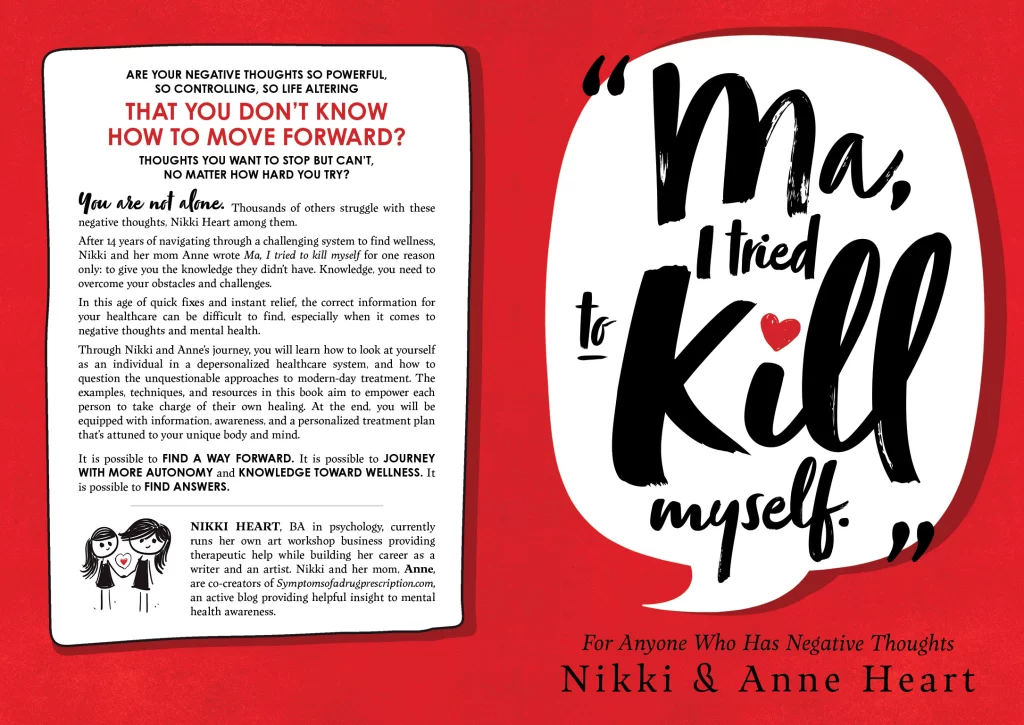
*Although we wrote this post together, we have chosen to present the following through Mom’s eyes.
Recognizing self-care
Have you ever paused to wonder how something as simple as a walk around the block, a few deep breaths, or jotting down your thoughts in a journal could actually support your mental health?
I used to dismiss those ideas too.
For years, I believed that real healing had to come from a prescription bottle. That if we just found the right pill, everything—anxiety, depression, negative thoughts—would finally be cured. Unfortunately, I clung to this belief as I watched my daughter cycle through medication after medication, each promising relief but delivering little more than side effects and loss hope.
And this, to say the least, was heartbreaking.
Eventually after recognizing prescription drugs weren’t the answer for my daughter, we began to explore different treatment plans.
In each treatment plan such as CBT, DBT, mindfulness, the concept of self-care was always incorporated. We realized that the foundation of mental and physical wellness is self-care, no matter if you are on a prescription drug treatment program or not.
Understanding self-care
The National Institutes of Health defines self-care as the intentional practice of engaging in activities that support both physical and mental well-being. It’s not indulgent—it’s foundational.
Research consistently shows that self-care strategies can reduce stress, boost energy levels, and even lower the risk of illness. Even small consistent actions can create meaningful shifts in your overall health.
Incorporating self-care into daily life isn’t about selfishness—it’s about improving your overall wellness. And over time can have a big impact.
Incorporating self-care isn’t one-size-fits-all
For me, it’s about slowing down and reconnecting with the present moment. When stress or anxiety creeps in, I’ll head outside for a gentle walk. I take my time, looking up at the sky, listening to the birds, and watching chipmunks dart through the leaves. It’s simple, but it grounds me.
My daughter, Nikki, finds her peace in movement. She runs—rain or shine. That rhythm, that push—it helps her clear the mental clutter and shake off the weight of negative thoughts.
And then there are those quiet moments by the water. I’ve seen how just sitting on a bench near a lake or stream can soften the noise in someone’s mind. There’s something about the stillness that invites calm.
The point is: self-care is about choosing to show up for yourself. It’s about finding what works for you and making space for it—daily, if possible. Whether it’s physical, emotional, spiritual, or creative, these small acts are how we begin to take back control of our well-being.
Key components of self-care
Exercise regularly: It doesn’t have to be strenuous, just as long as it keeps you moving
Eat healthy: Organic is best; keep sweets and non-healthy foods for special occasions
Stay connected: In today’s world with remote learning and working, it is easy to isolate yourself. Even if you have no one to do something with, you can be your best friend. Go to a park, zoo, art museum, mall but get out and do something
Make sleep a priority
Live in the present: It’s easy to keep going back to the past but try not to. It is also easy to worry about the future, but no one can say what will happen tomorrow. It is OK to remember the past or plan for the future, but then you have to just go forward
Set limits for social media: Learn to put the phone down
Limit alcohol and recreational drugs consumption
Set realistic goals andpriorities in your homelife: Over committing can lead to being overwhelmed. No one can do everything all of the time. Learn to say no whenever possible
A few more ideas about self-care
Self-care, at its core, is something you do for you. It’s not a task to check off, not something done out of obligation or for someone else’s benefit. It’s about tending to your own well-being—physically and mentally.
Here are a few options to explore:
Mindfulness
Yoga
Soaking in a warm bath or just your feet; if there are no health issues prohibiting it, some people find using Epson salt in the warm water decreases anxiety
Journaling
Drawing
Listening to music
Meditation
Walking, running, jogging, hiking, biking
Golfing
Horseback riding
And the list goes on. The key is to find what feels restorative and sustainable for you.
In some cases, self-care can serve as a powerful complement—or even an alternative—to traditional drug-based treatment plans.
But regardless of your path, it should always be part of a broader wellness strategy. Because healing isn’t just about symptom relief—it’s about reclaiming your life, one intentional act at a time.
Learn More
♥
Live Healthier
Weekly Quote
“You can’t pour from an empty cup. Take care of yourself first.”
Note: All information in “Nikki’s Story and Mom’s Story” are based on detail journals covering seven years of Nikki’s life on prescription drugs.
Medical Disclaimer: We share informational resources that are intended to help you with your self-care plan. We are not professionals. We write based on personal experience and personal research.
Nothing on this Website is intended to be taken as medical advice. The information provided on the Website is intended to encourage, not replace, direct patient-health professional relationships. Always consult with your doctor before altering your medications. Adding nutritional supplements may alter the effect of medication. Any medication changes should be done only after proper evaluation and under medical supervision.
General Disclaimer: This site contains links to other internet sites. We are not endorsing any products or services in these sites nor are we endorsing or did we approve information within these sites. Each site contains its own “Privacy Policy”,